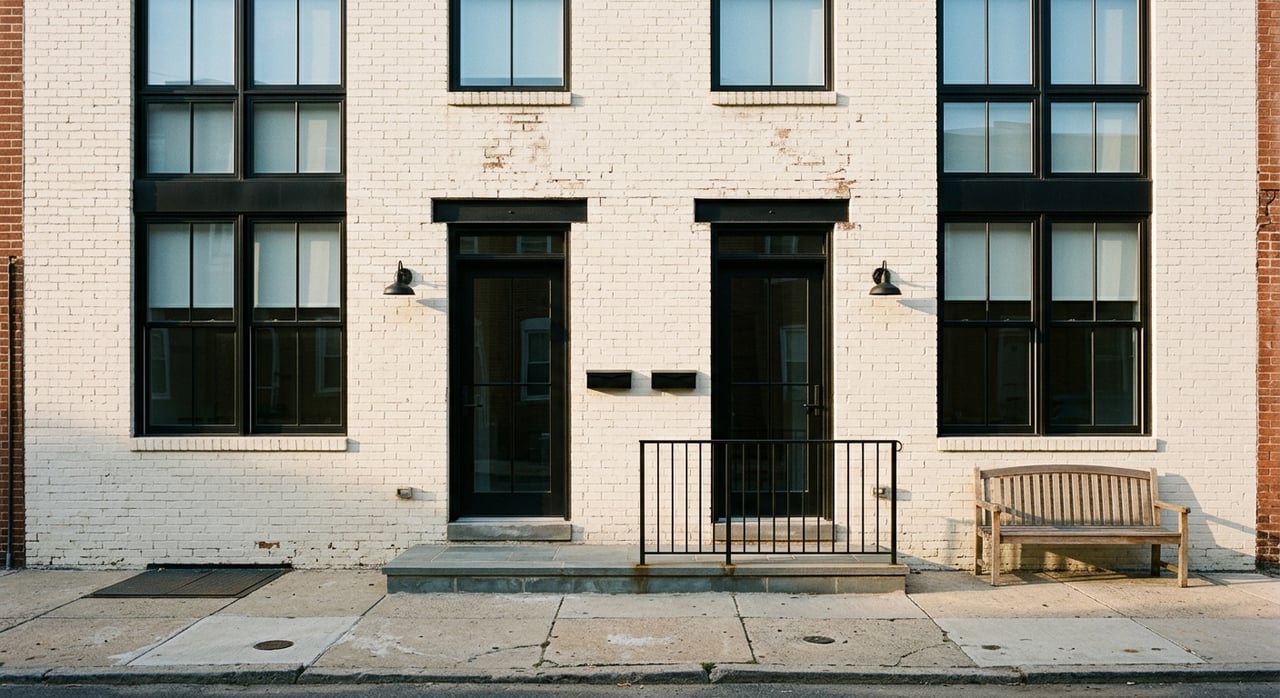
Point Breeze Duplex Investment: Rents, Risks, and Returns
April 2, 2026
April 2, 2026
Wondering whether a duplex in Point Breeze still pencils out in today’s market? You are not alone. For many Philadelphia investors, Point Breeze stands out as a neighborhood where the entry price can still be more approachable than nearby premium areas, while rents remain strong enough to support a real investment strategy. In this guide, you will get a practical look at rents, risks, and returns so you can underwrite a Point Breeze duplex with more confidence. Let’s dive in.
Point Breeze continues to draw interest because it sits in an interesting middle ground. According to Redfin’s Point Breeze housing market data, the median sale price was $322,500 in February 2026. That is well below Graduate Hospital’s median sale price of $604,050 and slightly below Queen Village-Pennsport at $354,950.
That lower basis matters if you are looking for a small multifamily property that has room for improvement. Point Breeze is not the ultra-cheap play it may once have been, but it can still offer a more attainable path into South Philadelphia investing than some nearby neighborhoods.
Realtor.com’s neighborhood overview also shows 156 homes for sale and a median list price of $349,950. That tells you there is active inventory, but it also reinforces that Point Breeze should now be viewed as a maturing market rather than a deep-discount one.
If you search current small multifamily inventory, you will see a wide range of asking prices. Zillow’s Point Breeze duplex search shows 15 active listings, with visible asking prices ranging from $215,000 to $1.85 million.
That range can be misleading if you treat everything as one bucket. The listings include duplexes, triplexes, and larger multifamily or mixed-use properties. In practice, the most relevant small multifamily opportunities seem to cluster from the low $300,000s to the high $500,000s, depending on size, renovation level, and legal unit count.
For you as a buyer, the key takeaway is simple: do not underwrite from headline pricing alone. A fully renovated legal duplex is a very different asset from a property that is physically set up as two units but may not be approved that way.
On the income side, Point Breeze still shows healthy rent levels for South Philadelphia. Zumper’s March 2026 Point Breeze rent data puts the median rent at $1,775, with average rents of $1,350 for a one-bedroom, $1,800 for a two-bedroom, and $2,325 for a three-bedroom.
Those numbers create some useful quick math for duplex buyers. A one-bedroom plus two-bedroom duplex could gross about $3,150 per month before vacancy and expenses. A two-bedroom plus three-bedroom setup could gross about $4,125 per month before vacancy and expenses.
Point Breeze rents are below Graduate Hospital at $1,900 and Queen Village-Pennsport at $2,000, but above South Philadelphia West at $1,680. That gives you a sense of where the neighborhood sits in the local rent hierarchy. It supports the idea that Point Breeze can offer a balance of lower acquisition cost and still-meaningful rental income.
When investors first look at duplexes, they often focus too heavily on gross rent. Gross rent is important, but it is only the start. Your actual return depends on purchase price, financing terms, vacancy, repairs, taxes, insurance, and any renovation costs needed to stabilize the property.
A simple first-pass framework can help:
This matters in Point Breeze because the spread between a good deal and an average one can come down to legal use, unit condition, and your renovation budget. A duplex bought at the right price with clean compliance and efficient upgrades may work well. A property with permit issues or underestimated capital needs can change the math quickly.
This is one of the most important issues in Point Breeze small multifamily investing. Philadelphia zoning rules make a clear distinction between what is legally permitted and what is simply physically configured as multiple units.
According to the City of Philadelphia zoning permit guidance, changing the number of residential units or changing a property’s use requires a zoning permit. The zoning code also distinguishes among districts. Multiple principal uses are allowed in RM and RMX districts, while RSA, RSD, and RTA districts generally allow only one principal use or building per lot.
For you, that means a “duplex” listing should always be verified. The safest question to ask is not whether the building looks like two units. It is whether the city recognizes it as two legal units.
Owning a rental in Philadelphia comes with operational requirements. The city states that long-term rental owners need a Rental License and related compliance documents. One license can cover all units at a single address, but the property must be properly zoned and supported by proof of legal occupancy.
Owners also must name a local managing agent and provide tenants with a Certificate of Rental Suitability. For properties built before March 1978, lead-safe or lead-free certification is required before a new or renewed lease or before rental-license issuance in applicable cases.
These are not minor details. If you miss them in underwriting, they can delay leasing, add costs, or create problems after closing.
Climate exposure deserves more attention than many small investors give it. Redfin’s data, drawing from First Street, indicates that Point Breeze has moderate flood risk, with 62% of properties at risk of severe flooding over the next 30 years, and severe heat risk, with 97% of properties at severe heat risk.
For a duplex buyer, that strengthens the case for careful due diligence around drainage, waterproofing, roofing, HVAC systems, and insurance. In a neighborhood of attached and older housing stock, deferred maintenance can compound quickly if you are not looking closely at water management and building systems.
The sales market is somewhat competitive, but rental performance still depends heavily on execution. Redfin reports homes selling in about 87 days and around 3% below list. Zumper also shows 113 rentals in the market and a neighborhood split of roughly 53% owner-occupied and 47% renter-occupied.
That suggests a real rental base, but it does not guarantee fast lease-up for every property. In practical terms, your vacancy risk may come down more to pricing, condition, and unit layout than to a simple neighborhood oversupply story.
In Philadelphia, transaction and holding costs can materially affect returns. The city’s realty transfer tax rate is 4.578%, and the 2025 Real Estate Tax rate is 1.3998% of assessed value.
Those numbers should be in your acquisition model from day one. If you wait to add them later, the investment may look stronger on paper than it really is.
You should also be realistic about stabilization costs. Even when a duplex appears rent-ready, small multifamily properties often need some level of turnover work, systems updates, or compliance cleanup before they can perform at their projected level.
For most buyers, Point Breeze looks stronger as a value-add corridor than as a pure passive appreciation or pure cash flow play. The lower entry basis compared with Graduate Hospital gives you more room to create value through renovation, better unit mix, or more efficient operations.
At the same time, the neighborhood is no longer cheap enough to assume easy upside. The better approach is disciplined underwriting. You want to buy below premium South Philadelphia pricing, verify legal use, and make sure your renovation plan is realistic and efficient.
The broader policy backdrop also matters. The city has tied higher transfer-tax revenue to housing initiatives through its H.O.M.E. plan, as noted in the same Philadelphia tax update. In practical terms, that can support continued reinvestment while also suggesting that rent growth and appreciation may be steadier rather than explosive.
Before you move forward on a Point Breeze duplex, it helps to have a checklist:
This is where local guidance can make a real difference. In small multifamily investing, a property that looks similar from the street can perform very differently depending on legality, renovation level, and compliance history.
If you are looking at South Philadelphia multifamily opportunities, Point Breeze still deserves a spot on your list. It offers a lower acquisition basis than some nearby neighborhoods, healthy rent levels, and a real case for value-add investing.
The opportunity is there, but it is not automatic. The strongest buys are likely to be properties where you can confirm legal use, underwrite the city-specific costs correctly, and improve or lease the units efficiently. If you want help evaluating a Point Breeze duplex, the team at Best Philly Homes can help you assess the neighborhood, compare the numbers, and move through the process with more clarity.
Stay up to date on the latest real estate trends.

We pride ourselves in providing personalized solutions that bring our clients closer to their dream properties and enhance their long-term wealth. Contact us today to find out how we can be of assistance to you!